
If you have experienced water damage or flood damage in your Colorado home, mold is not a question of "if" — it is a question of "when." Mold can begin colonizing wet drywall, insulation, and wood framing within 24 to 48 hours of moisture exposure. What starts as an invisible microscopic problem can rapidly grow into a full-scale infestation that destroys your walls, poisons your air, and puts your family's health at serious risk. This guide covers everything Colorado homeowners need to know about mold damage: what it is, why it smells so bad, the real health dangers it poses, how professional remediation works, and how to choose a company you can actually trust.
What Is Mold and Why Does It Grow After Water Damage?
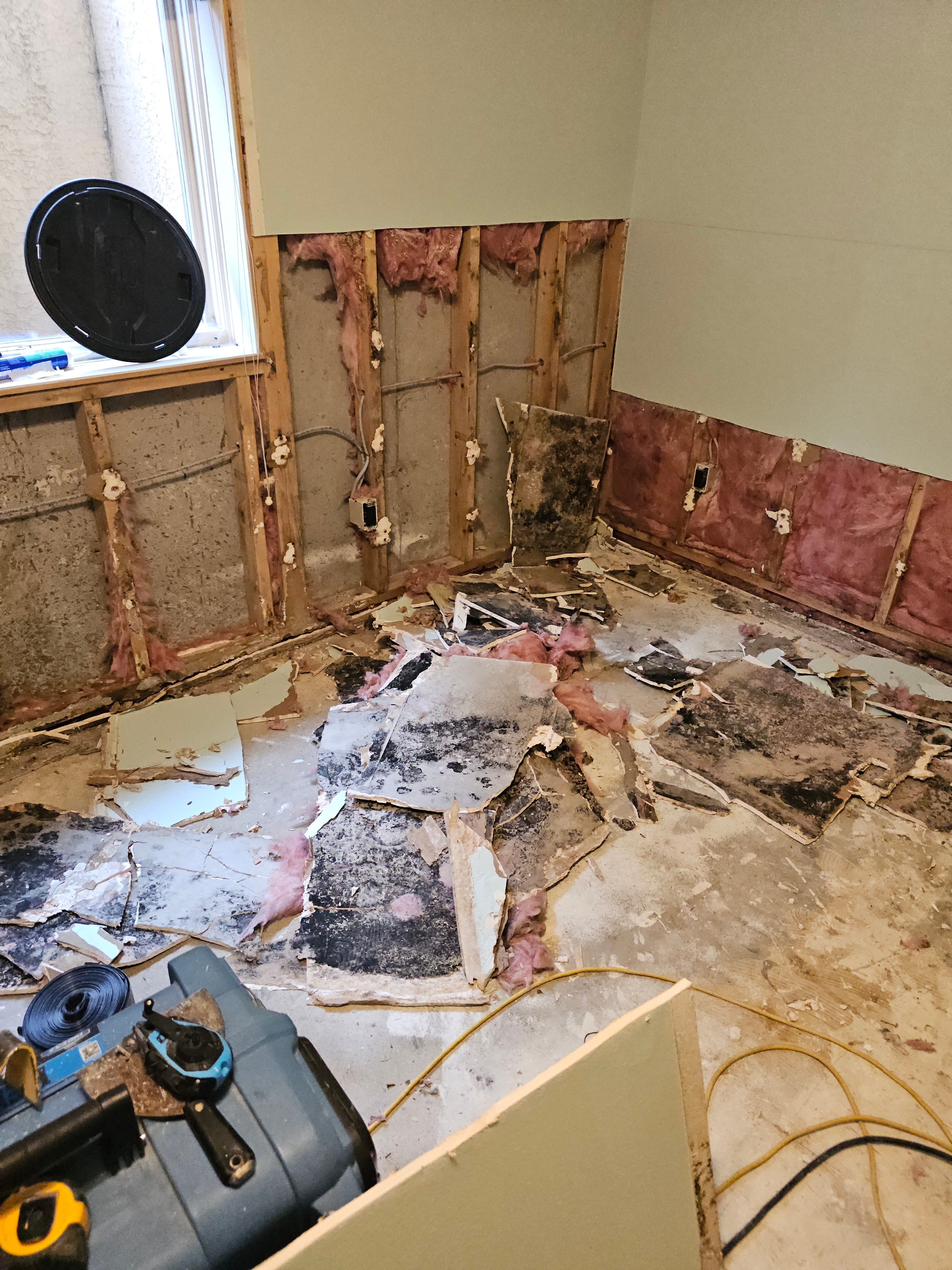
Mold is a type of fungus that reproduces by releasing microscopic spores into the air. These spores are everywhere — outdoors, indoors, floating invisibly in every room of your home right now. Under normal dry conditions, they are harmless. But the moment moisture enters the picture, those spores land on organic materials like drywall paper, wood studs, insulation, carpet backing, and ceiling tiles — and they begin to grow.
Water damage and flood damage create the perfect storm for mold growth. A burst pipe, a leaking roof, a backed-up sewer line, or a flash flood can saturate your walls and floors in minutes. The water soaks deep into porous building materials — far deeper than you can see or feel from the surface. Even after the visible water is gone, moisture remains trapped inside walls, under flooring, and inside insulation cavities. That hidden moisture is mold's food source.
Mold needs only three things to thrive: moisture, a food source (organic material), and temperatures between 40°F and 100°F. Colorado Springs homes provide all three year-round. Once mold establishes a colony, it spreads aggressively — sending out new spores that travel through your HVAC system, settle on new surfaces, and start new colonies throughout your home.
- Mold can begin growing within 24–48 hours of water exposure
- It thrives inside walls, under floors, and in insulation — invisible to the naked eye
- A single water damage event can seed mold colonies throughout an entire floor of your home
- Colorado's dry climate does NOT prevent indoor mold — trapped moisture in walls is all it needs
- Mold spreads through HVAC systems, contaminating rooms far from the original water damage
The Smell of Mold: Why Your Home Smells Musty, Earthy, or Like Rot
One of the first signs homeowners notice is a smell — a persistent, unpleasant odor that seems to come from nowhere and refuses to go away no matter how much you clean or air out the house. That smell is real, it is caused by mold, and it is a serious warning sign.
Mold produces chemical compounds called microbial volatile organic compounds, or mVOCs, as a byproduct of its metabolic processes. These compounds are what you smell. Depending on the species of mold and the materials it is growing on, the odor can range from musty and earthy (like wet dirt or old books) to sharp and pungent (like ammonia or chemicals) to deeply rotten and foul (like decaying organic matter). Some homeowners describe it as a "wet dog" smell, others as a "basement smell," and others as something they have never smelled before but immediately know is wrong.
The smell is often strongest in specific areas — near a wall that was once wet, in a closet adjacent to a bathroom, in a basement corner, or coming from air vents. This is because the mold colony is concentrated in those areas, releasing mVOCs directly into the air. If you notice the smell is worse when your HVAC system runs, that is a sign mold has colonized your ductwork and is being distributed throughout your entire home every time the system cycles on.
Here is the critical point: if you can smell mold, the colony is already large enough to be producing significant quantities of spores and chemical byproducts. You are not catching it early — you are catching it after it has already established itself. The smell is your body's warning system telling you that the air you are breathing is contaminated. Do not mask it with air fresheners or candles. Call a professional.
Smelling something musty in your Colorado Springs home after water damage or flooding? That odor means mold is already growing. Call Absolute Water Damage and Mitigation at 1-719-238-5064 for a free assessment.
Musty smell after flooding? Our mold remediation service finds and removes hidden mold.
Mold RemediationThe Real Health Dangers of Mold Exposure
Mold is not just an aesthetic problem or a property damage issue — it is a genuine public health hazard. The health effects of mold exposure range from mild and annoying to severe and life-altering, depending on the species of mold, the concentration of spores in the air, the duration of exposure, and the health status of the people being exposed. Children, the elderly, pregnant women, and anyone with a compromised immune system or pre-existing respiratory conditions are at the highest risk.
Respiratory Problems
The most common health effects of mold exposure are respiratory. Mold spores are small enough to be inhaled deep into the lungs, where they trigger inflammation and immune responses. Symptoms include persistent coughing, wheezing, shortness of breath, chest tightness, and worsening of asthma. People who have never had asthma before can develop it after prolonged mold exposure. According to the CDC, mold exposure is a significant contributor to asthma development in children.
Allergic Reactions
Many people are allergic to mold spores. Symptoms of mold allergy include sneezing, runny nose, red eyes, skin rash, and nasal congestion. These symptoms are often mistaken for seasonal allergies or a persistent cold. If your allergy symptoms are worse indoors than outdoors, or worse in certain rooms of your home, mold contamination is a likely cause. Mold allergies can develop over time — you may not have been allergic to mold before, but repeated exposure can sensitize your immune system.
Neurological and Cognitive Effects
Some mold species — particularly Stachybotrys chartarum, commonly known as black mold — produce mycotoxins, which are toxic chemical compounds that can have neurological effects. Symptoms of mycotoxin exposure include brain fog, difficulty concentrating, memory problems, headaches, dizziness, and fatigue. These symptoms are often dismissed as stress or other causes, but they can be directly linked to living in a mold-contaminated environment. Research published in peer-reviewed medical journals has documented cognitive impairment in individuals with prolonged exposure to mycotoxin-producing molds.
Skin and Eye Irritation
Direct contact with mold or mold-contaminated surfaces can cause skin irritation, rashes, and hives. Eye exposure to mold spores causes redness, itching, watering, and in severe cases, conjunctivitis. These symptoms are particularly common in people who attempt to clean mold themselves without proper protective equipment.
Serious Illness in Vulnerable Populations
For immunocompromised individuals — including cancer patients undergoing chemotherapy, organ transplant recipients, people with HIV/AIDS, and those on long-term corticosteroid therapy — mold exposure can cause invasive fungal infections that are life-threatening. Aspergillus species, which commonly grow after water damage, can cause invasive aspergillosis in immunocompromised patients, a condition with a mortality rate that can exceed 50% without aggressive treatment.
- Persistent coughing, wheezing, and shortness of breath
- Worsening asthma or new-onset asthma, especially in children
- Chronic sinus congestion, runny nose, and sneezing
- Headaches, brain fog, and difficulty concentrating
- Fatigue and general malaise that does not improve with rest
- Skin rashes and eye irritation
- Nosebleeds (associated with high spore concentrations)
- Life-threatening infections in immunocompromised individuals
Types of Mold Commonly Found After Water Damage and Flood Damage
Not all mold is the same. After water damage or flood damage, several species commonly colonize Colorado homes, each with different characteristics and health implications.
Stachybotrys Chartarum (Black Mold)
The most feared mold species, black mold is a dark greenish-black mold that grows on materials with high cellulose content — drywall, wood, paper, and ceiling tiles — that have been wet for an extended period (typically more than a week). It produces mycotoxins that can cause severe health effects with prolonged exposure. Black mold is not always black in color, and not all black-colored mold is Stachybotrys — only laboratory testing can definitively identify mold species.
Aspergillus
One of the most common indoor molds, Aspergillus can appear in many colors — white, yellow, green, brown, or black. It grows rapidly on a wide variety of materials and can produce mycotoxins. It is a particular concern for immunocompromised individuals due to its ability to cause invasive infections.
Penicillium
Penicillium is a blue-green mold that spreads very quickly and is commonly found on water-damaged building materials, carpets, and insulation. It produces mycotoxins and is a potent allergen. It is one of the first molds to colonize after a water damage event.
Cladosporium
Cladosporium is an olive-green to black mold that grows on fabrics, wood, and other porous materials. It is one of the most common outdoor molds and frequently enters homes after flood damage. It is a significant allergen and can trigger asthma attacks.
Chaetomium
Chaetomium is a cotton-like white mold that turns gray and then black as it matures. It has a strong musty odor and is commonly found on water-damaged drywall and baseboards. It produces mycotoxins and is associated with neurological symptoms in some individuals.
How Mold Destroys Your Home: The Structural Damage
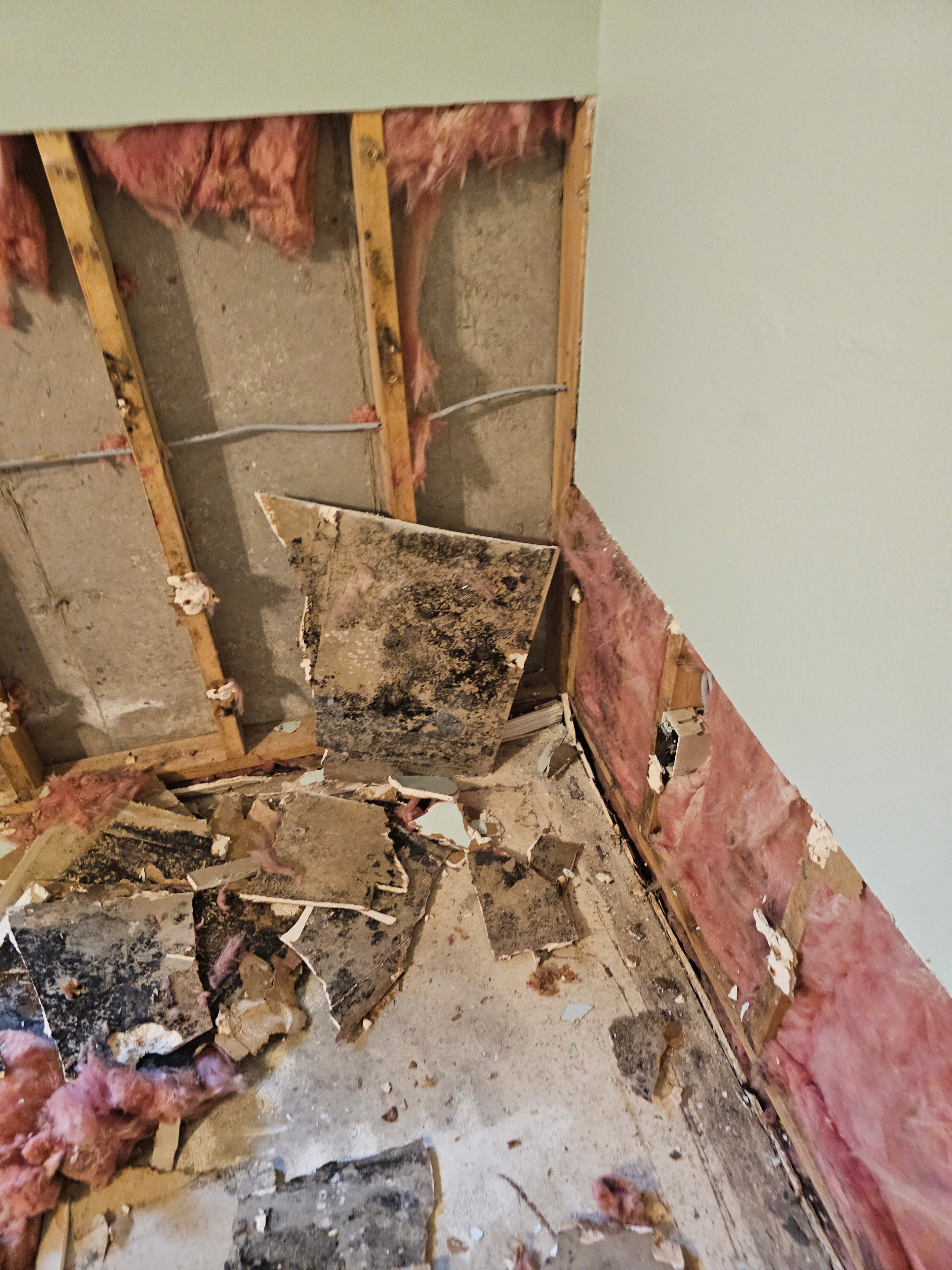
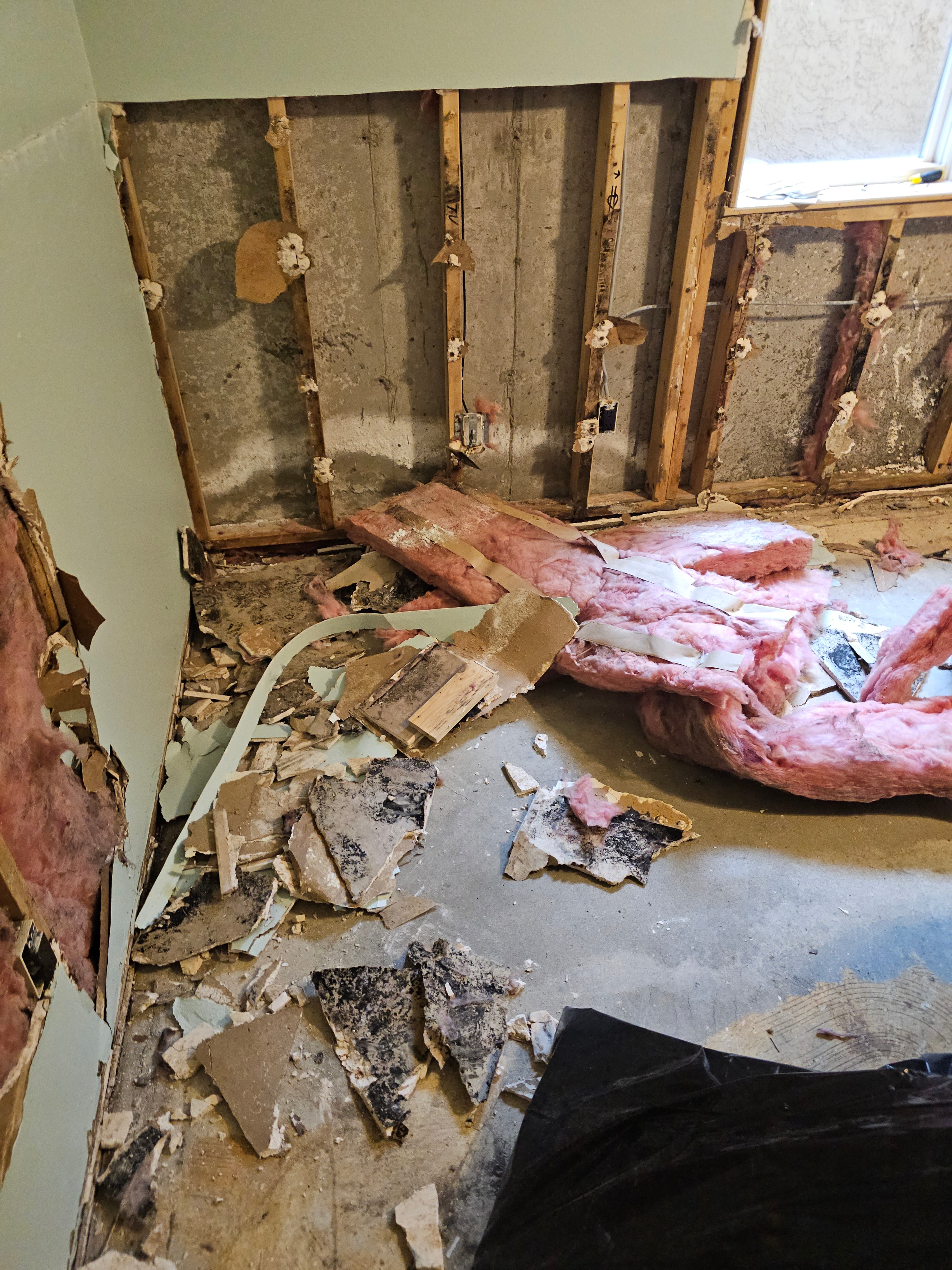
Beyond the health risks, mold causes catastrophic structural damage to your home. Mold is not just sitting on the surface of your walls — it is actively consuming the organic materials it grows on. The mycelium (root structure) of mold penetrates deep into drywall, wood framing, insulation, and subfloor materials, breaking down the cellulose and other organic compounds that give these materials their structural integrity.
Drywall that has been colonized by mold becomes soft, crumbly, and structurally compromised. It cannot be cleaned — it must be removed and replaced. Wood framing that has been heavily colonized can lose significant structural strength, potentially compromising the integrity of walls, floors, and ceilings. Insulation that has been wet and molded loses its insulating properties and must be completely removed and replaced. Subfloor materials — whether plywood or OSB — can delaminate and rot when colonized by mold, requiring complete subfloor replacement.
The longer mold is allowed to grow, the more material it destroys and the more expensive the remediation becomes. A water damage event that is addressed within 24 to 48 hours may require only drying and minor repairs. The same event left unaddressed for two weeks can require complete demolition of walls, replacement of all insulation, and potentially structural repairs — a project that can cost tens of thousands of dollars.
The Mold Remediation Process: What Professional Removal Actually Looks Like
Mold remediation is not mold cleaning. You cannot spray bleach on mold and call it done. Bleach is a surface disinfectant — it kills mold on non-porous surfaces, but it does not penetrate porous materials like drywall and wood where the mold's root structure lives. Wiping or spraying bleach on moldy drywall kills the surface mold temporarily, but the mycelium deep in the material continues to grow and the mold returns within days or weeks. Professional mold remediation is a systematic, multi-step process that physically removes contaminated materials and addresses the underlying moisture problem.
Step 1: Assessment and Testing
A certified mold remediation professional begins with a thorough assessment of the affected area. This includes visual inspection, moisture mapping with professional moisture meters and thermal imaging cameras, and in many cases, air quality testing and surface sampling. Air quality testing measures the concentration and species of mold spores in the air. Surface sampling identifies the species of mold present. This data guides the remediation plan and establishes a baseline for post-remediation clearance testing.
Step 2: Containment
Before any demolition or cleaning begins, the affected area must be contained to prevent mold spores from spreading to unaffected areas of the home. This involves sealing off doorways and HVAC vents with heavy plastic sheeting and tape, and establishing negative air pressure in the work area using HEPA-filtered air scrubbers. Negative air pressure means air flows into the contained area but cannot flow out — any spores disturbed during remediation are captured by the HEPA filtration rather than escaping into the rest of the home.
Step 3: Personal Protective Equipment
Remediation technicians working in mold-contaminated areas must wear full personal protective equipment: N-95 or P-100 respirators, full-body Tyvek suits, gloves, and eye protection. This is not optional — the spore concentrations inside a containment zone during active remediation can be thousands of times higher than normal indoor air, and direct exposure without protection can cause immediate health effects even in healthy individuals.
Step 4: Removal of Contaminated Materials
All porous materials that have been colonized by mold must be physically removed and disposed of. This typically includes drywall, insulation, carpet and carpet padding, and in severe cases, sections of wood framing. These materials cannot be cleaned — the mold's root structure is too deeply embedded. Contaminated materials are double-bagged in heavy plastic bags, sealed, and disposed of according to local regulations. This is the phase that most homeowners are not prepared for — it looks like a demolition zone, because it is.
Step 5: HEPA Vacuuming and Antimicrobial Treatment
After contaminated materials are removed, all remaining surfaces in the affected area are HEPA-vacuumed to remove residual spores and debris. HEPA vacuums capture particles as small as 0.3 microns — small enough to capture mold spores, which range from 1 to 100 microns in size. Following HEPA vacuuming, all surfaces are treated with EPA-registered antimicrobial solutions that kill remaining mold and inhibit future growth. Some companies also apply encapsulants — sealant coatings that lock in any residual spores on surfaces that cannot be removed, such as concrete foundations.
Step 6: Drying and Moisture Control
Removing the mold without addressing the moisture source is pointless — the mold will return. Professional remediation always includes identifying and eliminating the moisture source, whether that is a plumbing leak, a roof leak, inadequate ventilation, or flood damage. Industrial dehumidifiers and air movers are deployed to dry the structure to acceptable moisture levels — typically below 16% moisture content in wood and below 1% in concrete. Moisture readings are documented throughout the drying process.
Step 7: Post-Remediation Clearance Testing
A reputable mold remediation company will conduct post-remediation clearance testing — air quality and surface sampling performed after remediation is complete and containment is removed. Clearance testing verifies that mold spore levels have returned to normal background levels and that the remediation was successful. This testing should ideally be performed by an independent third party, not the same company that performed the remediation, to ensure objectivity.
Real Mold Damage We Have Remediated in Colorado Springs
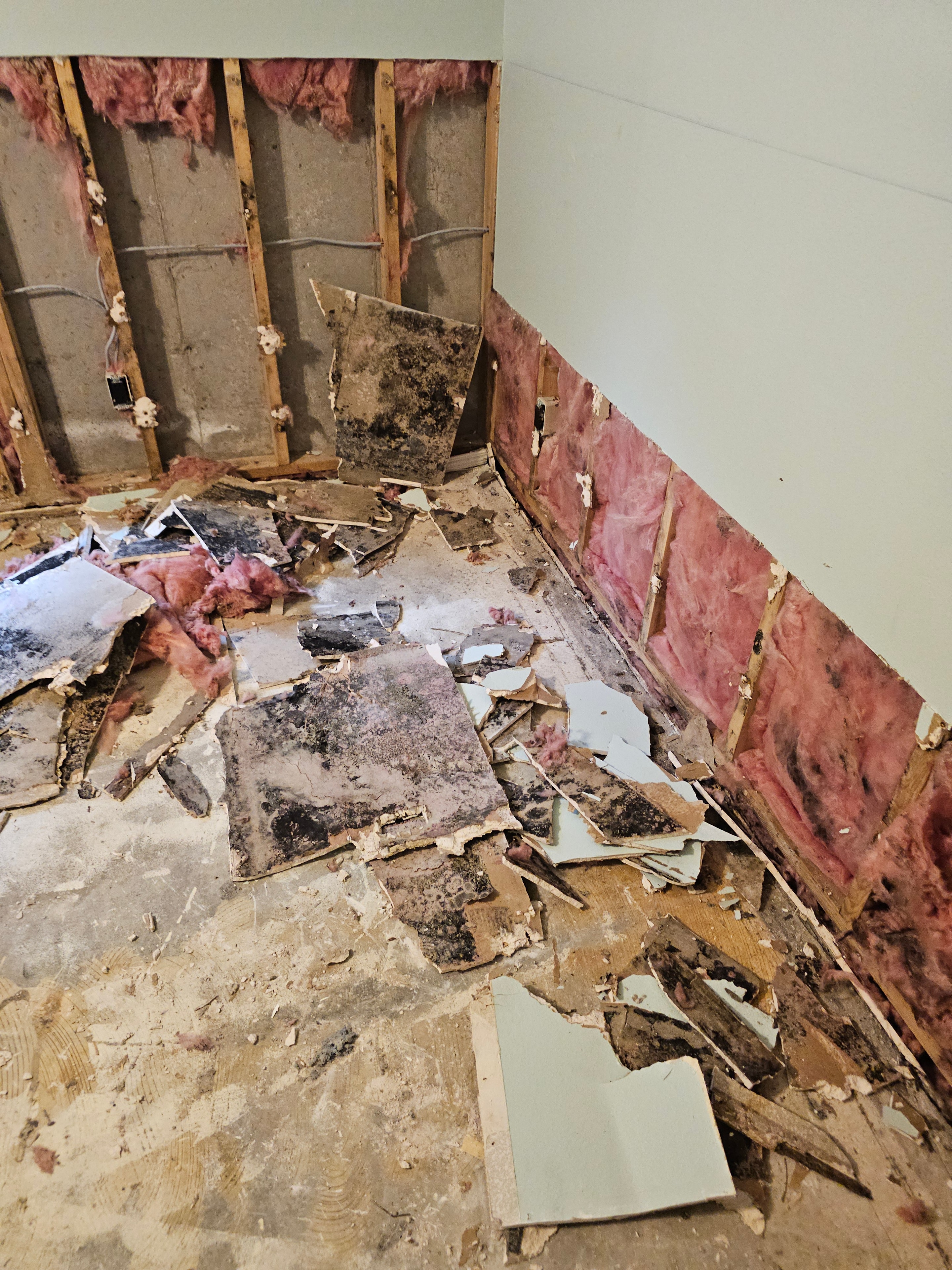
The photos in this article are from actual mold remediation jobs performed by Absolute Water Damage and Mitigation in the Colorado Springs area. What you are seeing is not staged — this is what mold damage from water damage and flood damage actually looks like inside the walls of Colorado homes.
In these cases, water had been present inside the wall cavities for an extended period before the homeowners realized the extent of the problem. The drywall had been completely consumed by mold colonies, the insulation was saturated and heavily contaminated, and the wood framing showed significant mold growth. The musty odor in these homes was overwhelming — detectable from outside the front door. The homeowners had been experiencing respiratory symptoms, headaches, and fatigue for months before the mold was discovered.
Complete remediation of these spaces required full demolition of affected walls, removal of all insulation, HEPA vacuuming of framing, antimicrobial treatment of all structural surfaces, industrial drying to bring moisture levels to acceptable ranges, and post-remediation clearance testing. The homes were then rebuilt with new drywall and insulation after clearance testing confirmed the mold had been successfully eliminated.
Why DIY Mold Removal Is Dangerous and Ineffective
Every week, homeowners attempt to handle mold themselves with bleach, vinegar, hydrogen peroxide, and store-bought mold sprays. We understand the impulse — mold remediation is expensive, and it feels like something you should be able to handle yourself. But DIY mold removal is almost always ineffective and can actually make the problem significantly worse.
- Bleach does not kill mold in porous materials — it only kills surface mold temporarily
- Disturbing mold without proper containment releases massive quantities of spores into your home's air
- Without moisture mapping equipment, you cannot identify all affected areas — you will miss hidden mold
- Without HEPA filtration, spores spread through your HVAC system to unaffected rooms
- Without post-remediation testing, you have no way to verify the mold has been eliminated
- Improper disposal of mold-contaminated materials can spread contamination
- Exposure to high spore concentrations without proper PPE can cause immediate health effects
The EPA recommends that mold covering more than 10 square feet be handled by a professional. In practice, by the time mold is visible on the surface of a wall, the colony inside the wall cavity is almost always larger than 10 square feet. What you see on the surface is a fraction of the actual contamination.
How to Choose a Mold Remediation Company You Can Trust
The mold remediation industry is unfortunately full of companies that cut corners, use improper techniques, and leave homeowners with recurring mold problems and wasted money. Knowing what to look for — and what red flags to avoid — is essential when choosing a company to trust with your home and your family's health.
Look for IICRC Certification
The Institute of Inspection, Cleaning and Restoration Certification (IICRC) is the gold standard for the restoration industry. The IICRC AMRT (Applied Microbial Remediation Technician) certification specifically covers mold remediation and requires technicians to demonstrate knowledge of mold biology, health effects, containment procedures, remediation protocols, and safety practices. Absolute Water Damage and Mitigation employs IICRC AMRT-certified technicians. Ask any company you are considering for their IICRC certification numbers and verify them at iicrc.org.
Demand a Written Scope of Work
A reputable mold remediation company will provide a detailed written scope of work before beginning any remediation. This document should specify exactly what materials will be removed, what containment procedures will be used, what antimicrobial products will be applied, and what post-remediation testing will be performed. Be very wary of any company that gives you a verbal estimate only or refuses to put their process in writing.
Insist on Post-Remediation Clearance Testing
Any company that does not offer post-remediation clearance testing is not doing the job correctly. Clearance testing is the only way to verify that remediation was successful. Ideally, this testing should be performed by an independent industrial hygienist or environmental testing company, not the remediation company itself. If a company tells you clearance testing is unnecessary or tries to talk you out of it, walk away.
Check Reviews and References
Look for companies with a substantial history of verified Google reviews from real customers in your area. Read the reviews carefully — look for specific mentions of the remediation process, professionalism, communication, and whether the mold problem was resolved permanently. Be skeptical of companies with very few reviews or reviews that seem generic. Ask for references from past mold remediation customers and actually call them.
Red Flags to Avoid
- Companies that quote a price over the phone without an in-person assessment
- Companies that do not mention containment procedures
- Companies that claim bleach treatment alone is sufficient
- Companies that do not offer post-remediation clearance testing
- Companies without IICRC or equivalent certification
- Companies that pressure you to sign immediately or offer "today only" discounts
- Companies that cannot provide proof of insurance and licensing
- Companies that do not address the moisture source — only the mold
Why Colorado Springs Homeowners Trust Absolute Water Damage and Mitigation
Absolute Water Damage and Mitigation has built its reputation in Colorado Springs and the surrounding communities on one principle: do the job right, every time. We are not a franchise. We are not a national call center that dispatches whoever is available. We are a locally owned and operated company staffed by IICRC-certified technicians who live and work in this community and take personal pride in every job we complete.
When you call us for mold remediation, you get a thorough assessment using professional moisture mapping equipment and thermal imaging cameras — not a quick visual inspection. You get a detailed written scope of work before we touch anything. You get proper containment with negative air pressure and HEPA filtration. You get physical removal of all contaminated materials — not surface cleaning with bleach. You get post-remediation clearance testing to verify the job is done. And you get a team that communicates with you throughout the entire process so you always know what is happening in your home.
We have performed mold remediation on hundreds of homes throughout El Paso County, Teller County, Fremont County, Pueblo County, and the surrounding areas. We have seen mold damage in every form — from small bathroom mold to catastrophic whole-house contamination following major flood damage. We know what proper remediation looks like, and we will not cut corners to save time or money.
We also work directly with insurance companies. Mold remediation following water damage or flood damage is often covered by homeowners insurance, and we have extensive experience documenting damage, working with adjusters, and ensuring our clients receive the coverage they are entitled to. We can help you navigate the insurance process from start to finish.
Preventing Mold After Water Damage and Flood Damage
The best mold remediation is the mold remediation you never need. If your home experiences water damage or flood damage, the single most important thing you can do to prevent mold is to call a professional water damage restoration company immediately — within hours, not days. Professional water damage restoration involves extracting standing water, removing wet materials that cannot be dried in place, and deploying industrial drying equipment to bring structural moisture levels to safe ranges within 3 to 5 days.
- Call a professional water damage restoration company within hours of any water damage event
- Do not attempt to dry water damage with household fans — they are ineffective and can spread mold spores
- Remove wet carpet and padding immediately — they cannot be effectively dried in place
- Maintain indoor humidity below 50% year-round with proper ventilation and dehumidification
- Fix plumbing leaks immediately — even slow drips create moisture that feeds mold
- Ensure proper ventilation in bathrooms, kitchens, and laundry rooms
- Inspect your roof, gutters, and foundation annually for water intrusion points
- After any flooding, have a professional assess moisture levels in walls and floors — even if they look dry
Frequently Asked Questions About Mold Damage
How long does mold remediation take?
The duration of mold remediation depends on the extent of the contamination. A small, contained mold problem in a single bathroom might be resolved in one to two days. A major mold infestation affecting multiple rooms following significant water damage or flood damage can take one to two weeks or longer. Your remediation company should provide a realistic timeline as part of the written scope of work.
Is mold remediation covered by homeowners insurance?
Mold remediation is often covered by homeowners insurance when the mold is the direct result of a covered water damage event — such as a burst pipe, appliance failure, or storm damage. Mold resulting from long-term neglect or maintenance failures is typically not covered. The key is to report water damage to your insurance company immediately and to document everything. Absolute Water Damage and Mitigation works directly with insurance companies and can help you navigate the claims process.
Can I stay in my home during mold remediation?
Whether you can remain in your home during remediation depends on the extent of the contamination and the location of the affected areas. For small, contained mold problems, it may be possible to remain in the home with proper containment in place. For large-scale remediation involving significant demolition or contamination of living areas, temporary relocation is strongly recommended — particularly for children, the elderly, pregnant women, and anyone with respiratory conditions or compromised immunity.
How do I know if the mold is really gone?
The only way to verify that mold remediation was successful is post-remediation clearance testing — air quality sampling and surface sampling performed after remediation is complete. This testing compares indoor spore levels to outdoor baseline levels and verifies that mold species associated with the original contamination are no longer present at elevated levels. Absolute Water Damage and Mitigation provides clearance testing as part of our remediation process.
What is the difference between mold removal and mold remediation?
Mold removal implies simply removing visible mold — cleaning or wiping it away. Mold remediation is a comprehensive process that addresses the entire contamination: containment, physical removal of contaminated materials, HEPA vacuuming, antimicrobial treatment, moisture source elimination, structural drying, and clearance testing. True mold remediation eliminates the problem; mold removal typically only delays its return.
Mold damage from water damage or flood damage in Colorado Springs, Pueblo, Canon City, or anywhere in Southern Colorado? Call Absolute Water Damage and Mitigation 24/7 at 1-719-238-5064. IICRC AMRT-certified technicians. Free assessments. We work with all insurance companies.


